

You searched sports injury chiropractor near me because something still hurts, and the usual advice hasn’t fixed it.
Maybe your shoulder still pinches every time you go overhead. Maybe your back locks up after deadlifts. Maybe your knee barks on runs, during split squats, or halfway through a round of golf. You rested. You stretched. You did band work from a handout. You got adjusted. You felt a little better, then ended up right back in the same spot.
That cycle wears on you fast. Not just physically. It gets in your head.
When pain keeps showing up, you stop trusting your body. You start changing workouts, skipping movements, turning down games, and wondering if this is just what your body is now. For active adults, that’s not a small problem. It chips away at identity. If training, competing, lifting, running, rolling, or playing is part of who you are, being stuck in rehab limbo feels awful.
You need more than temporary relief. You need someone who can figure out why the problem keeps returning, then build a plan that gets you back to what you actually care about.
The Difference Between Symptom Chasing and Root Cause Care
Most failed treatment plans have the same problem. They chase pain instead of solving the breakdown that created it.
Your knee hurts, so they treat the knee. Your shoulder hurts, so they rub the shoulder. Your back is tight, so they crack the back. You get short-term relief, but the reason your body keeps overloading the same area never gets addressed. That’s how people spend months bouncing between appointments while their squat still feels off and their running stride still looks like a compensation pattern.
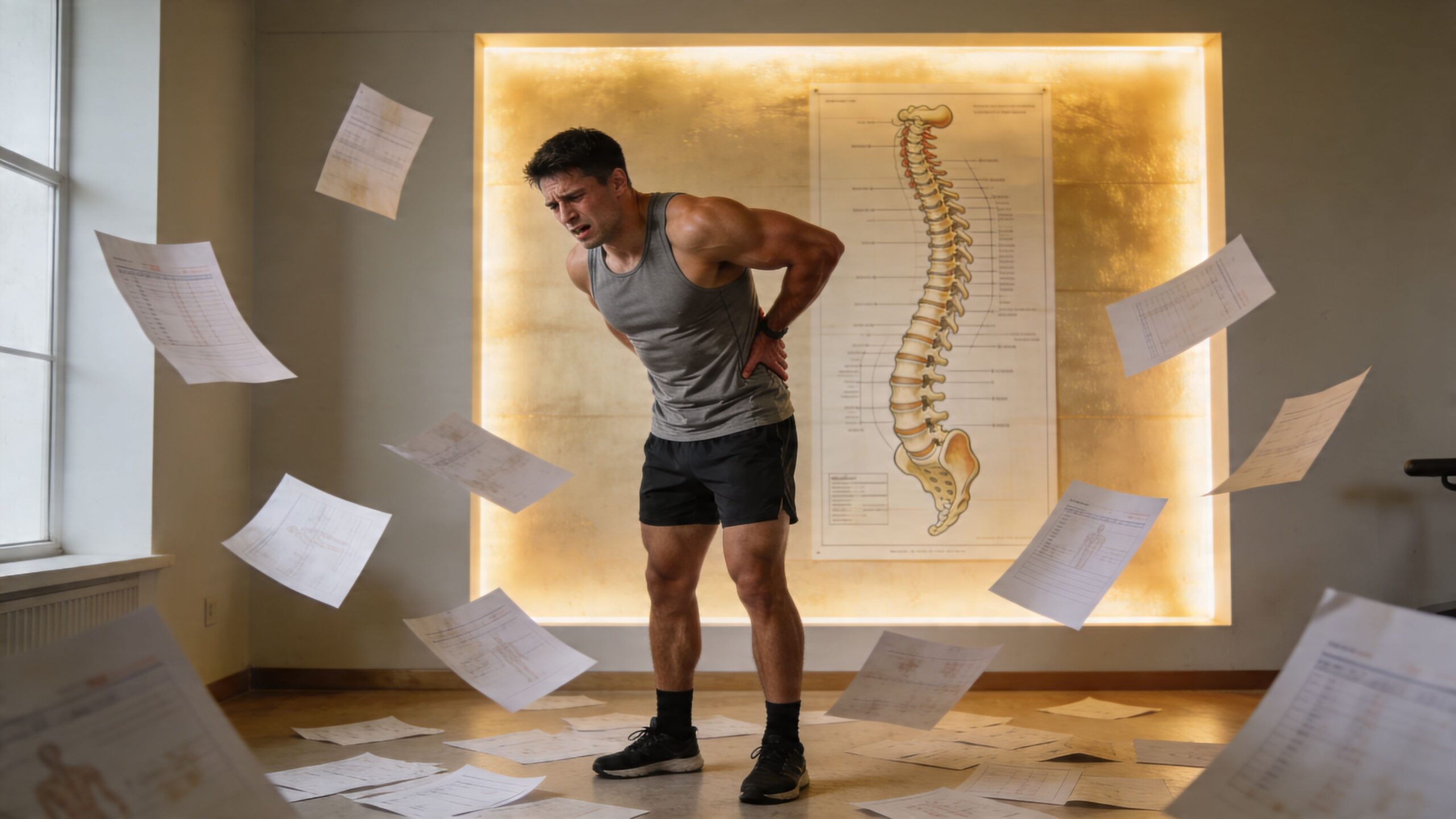
Why the quick fix keeps failing
A lot of standard care follows a passive model. Adjustment. Stim. Ice. Maybe a sheet of generic exercises. Then repeat.
That approach misses the bigger picture. Sports injury care works better when it blends manual treatment with movement-based rehab and sport-specific direction. Research on sports chiropractors found that experts commonly combine joint manipulation, used by 92%, with exercise prescription, used by 86%, and sport-specific advice, used by 86%, because relying on one tool alone fails to correct the body mechanics and muscle function driving the injury in the first place, according to this sports chiropractic practice analysis on PubMed Central.
Practical rule: If the whole plan is “come in, get adjusted, see how you feel,” that’s not performance care. That’s symptom management.
What root cause care actually looks like
Root cause care asks harder questions.
Why does your right hip dump forward at the bottom of a squat? Why does your rib cage flare when you press overhead? Why does your ankle stiffness force your knee to absorb stress it shouldn’t? Why does your shoulder keep getting irritated after BJJ, even though the pain is technically in the front delt?
A real sports injury chiropractor should connect pain to movement, strength, control, and training load. That’s why athletes and active adults often do better with a model that blends chiropractic with movement rehab, like a sports performance physical therapy approach, instead of treating every flare-up like an isolated event.
The real cost of symptom chasing
Temporary relief can fool you. You think you’re improving because pain drops for a few days. Then you reload the bar, increase mileage, get back on the mats, or play another weekend tournament, and the same issue returns.
That’s not bad luck. That’s an unfinished job.
If it’s this frustrating now, it usually doesn’t stay neutral. Compensation patterns spread. The cranky shoulder becomes a neck issue. The nagging hip starts feeding back pain. The stiff ankle turns every run into a knee problem. You don’t need another round of pop-and-pray care. You need a plan that makes your body harder to break.
How to Search for a Performance-Focused Chiropractor
Typing sports injury chiropractor near me into Google is fine. Stopping there is not.
A lot of clinics use sports language because it sounds good. Very few treat active adults like athletes. If you’ve already failed traditional PT or basic chiropractic, you need to search with more precision and judge clinics with more skepticism.
Search terms that narrow the field
Use search phrases that reveal how a clinic thinks, not just what service they sell.
- Try movement-based terms like “movement based chiropractor,” “sports rehab chiropractor,” or “functional chiropractor.”
- Add your location and your goal with searches like “sports rehab Mt. Laurel,” “return to sport chiropractor Cherry Hill,” or “running injury chiropractor Marlton.”
- Search by problem plus activity such as “CrossFit shoulder chiropractor,” “golf back pain chiropractor,” “BJJ neck pain rehab,” or “runner knee sports chiropractor.”
- Check for clinics that talk about assessment and progressions. A useful local example of that language is this functional chiropractor near me page.
Read the website like a skeptical buyer
Don’t look at the homepage and assume you’ve done your homework. Dig.
A performance-focused clinic usually shows its hand fast. You’ll see language about movement assessments, strength deficits, return-to-sport planning, and individualized rehab. You’ll notice they talk about athletes getting back to deadlifting, running, golf, or jiu-jitsu, not just “feeling better.”
Here’s a simple comparison:
| What to look for | What should make you pause |
|---|---|
| Clear explanation of how they assess movement | Vague promises about “aligning the body” |
| Rehab, strength work, and exercise progressions | Mostly passive therapies and generic wellness talk |
| Sport-specific examples | No mention of training, lifting, running, or return to play |
| One-on-one evaluation details | High-volume visit model with little clarity |
| Outcome-focused language | Long treatment plans sold before a real assessment |
If the website sounds like it could be written for your grandmother, your desk-job neighbor, and a powerlifter all at once, it’s probably too generic for your problem.
Red flags that matter
Some warning signs are obvious. Some are subtle.
- Miracle language. If they make every condition sound easy, they’re selling, not diagnosing.
- Passive care obsession. If the entire site revolves around adjustments, decompression, stim, laser, or taping, ask where the actual rebuilding happens.
- No proof they understand active people. If there’s no mention of loading, progressions, sport demands, or movement under stress, that matters.
- Cookie-cutter care plans. If the process sounds prepackaged before anyone has seen how you move, keep looking.
A strong clinic should make you think, “They understand why this keeps happening.” That’s the standard.
Crucial Questions to Ask Before You Book an Appointment
Many individuals ask the wrong question first. They ask, “Can you help my shoulder?”
Ask better questions. Force the clinic to show you how they think.
A phone call can save you weeks of wasted treatment. You’re not being difficult. You’re screening out bad care.

Ask how they structure recovery
Top sports chiropractors don’t just try to calm pain down. They move through phases. Research shows sports chiropractic fellows prioritize a phased model that progresses from pain relief in Phase 1, to mobility restoration in Phase 2, to strength and rehab in Phase 3, and 89% prioritize improving muscle and joint function. The same source warns that plans missing these progressions can lead to 20 to 30% higher reinjury rates, according to this sports chiropractic rehabilitation review on PubMed Central.
Ask it like this:
- “How do you move someone from pain relief into mobility and then into strength work?”
- “What does progression look like if I want to get back to lifting, golf, running, or BJJ?”
A good answer sounds specific. They’ll talk about stages, testing, re-testing, movement quality, and loading.
A bad answer sounds like this: “We usually have patients come in a couple times a week for adjustments and see how they respond.”
Ask what happens in the actual visit
Plenty of clinics advertise personalized care, then run you through a fast visit with ten minutes of face time.
Use blunt questions:
“What does a typical session involve?”
You want to hear about assessment, manual treatment if needed, active rehab, and coaching.“How much of the visit is active versus passive?”
If everything happens to you and nothing is coached by you, that’s a problem.“Will I be one-on-one with the doctor for the whole visit?”
For people with stubborn injuries, divided attention usually means divided results.
A solid provider should be able to explain the flow of care without sounding evasive or rehearsed.
Ask how they measure progress
Pain matters, but pain alone is a lousy scoreboard.
If you’re a runner, progress includes stride tolerance, single-leg control, and ability to build mileage. If you lift, progress includes depth, position, stability, and load tolerance. If you play golf, progress includes rotation, endurance, and how you feel the next morning after a round.
Ask these directly:
- “How do you measure progress beyond pain?”
- “What would tell you that the plan is working or not working?”
- “How would you handle my specific issue if it shows up during training?”
The right provider won’t hide behind vague optimism. They’ll talk about function, movement tests, tissue tolerance, and return-to-sport benchmarks.
Ask them to explain your sport back to you
Try this one and listen carefully:
“Can you walk me through how you’d handle a weightlifter with front-of-shoulder pain during jerks?”
Or a runner with recurring calf tightness. Or a golfer with back pain at follow-through. Or a BJJ athlete with neck flare-ups after rolling.
A clinician who understands active bodies should be able to speak your language. They don’t need to be a specialist in your sport. They do need to understand demands, positions, and the difference between rehab in theory and rehab that survives real training.
What an Elite Sports Injury Evaluation Looks Like
The first visit should not feel like a drive-through adjustment.
If you’ve had bad care before, you already know that routine. Quick chat. Point to the painful spot. Maybe a few orthopedic tests. Then a crack, a gadget, a heat pack, and you’re out the door. That kind of visit can make you feel attended to without being understood.
A high-level evaluation feels different almost immediately.

A real assessment starts with your sport
Say you’re a CrossFitter with shoulder pain during overhead work. A weak evaluation asks where it hurts. A sharp evaluation asks when it hurts, what loads trigger it, how long it’s been building, what your pull-to-press volume looks like, whether front rack or thoracic position is limited, and what happens when fatigue sets in.
That matters because pain during movement is rarely random. It usually follows a pattern.
A good chiropractor watches you move. Squat. Hinge. Lunge. Reach. Rotate. Press. Maybe even mimic the movement that causes the problem. They’re not doing that for show. They’re looking for where your body leaks force, shifts load, or avoids range.
They test the chain, not just the site
If your shoulder hurts, they may spend time on your thoracic spine, rib cage, scapular control, hips, and breathing mechanics. If your knee hurts, they may check your foot, ankle, and hip before they spend much time pressing on the knee itself.
That can surprise people. It shouldn’t.
Research on athletes receiving chiropractic care shows that about 32% experienced measurable improvements in flexibility, speed, agility, and power, which supports the idea that the right plan improves biomechanical efficiency and athletic output, not just pain levels, according to this article discussing chiropractic care for sports injuries.
Good evaluation answers a question most clinics skip. Not “what hurts?” but “what is forcing this area to keep cleaning up someone else’s mess?”
What you should leave with
By the end of the visit, you should have three things:
- A working diagnosis that makes sense in plain English
- A clear explanation of the movement problem
- A plan that ties treatment to the activities you want back
You should hear something like, “Your shoulder isn’t tolerating overhead work because your thoracic rotation is limited, your scapula isn’t upwardly rotating well, and you’re borrowing motion from the front of the joint.” That’s useful.
You should not hear vague noise about being “out of alignment” with no connection to the barbell, the golf swing, the mat, or the miles you run every week.
What elite care feels like
It feels specific. It feels connected. It feels like someone finally saw the whole problem.
That moment matters. A lot of active adults have never had a provider connect their pain to their movement history, training habits, old injuries, and current goals in one conversation. Once that happens, the path forward gets a lot clearer.
Why Active Rehab Is the Key to Lasting Results
An adjustment can open the door. It cannot hold the house up.
That’s the part too many people miss. Passive treatment can reduce irritation, improve motion, and calm a flare-up. Good. Use it when it helps. But if you stop there, you’re gambling that your body will magically keep the change without building the strength and control to support it.
It won’t.
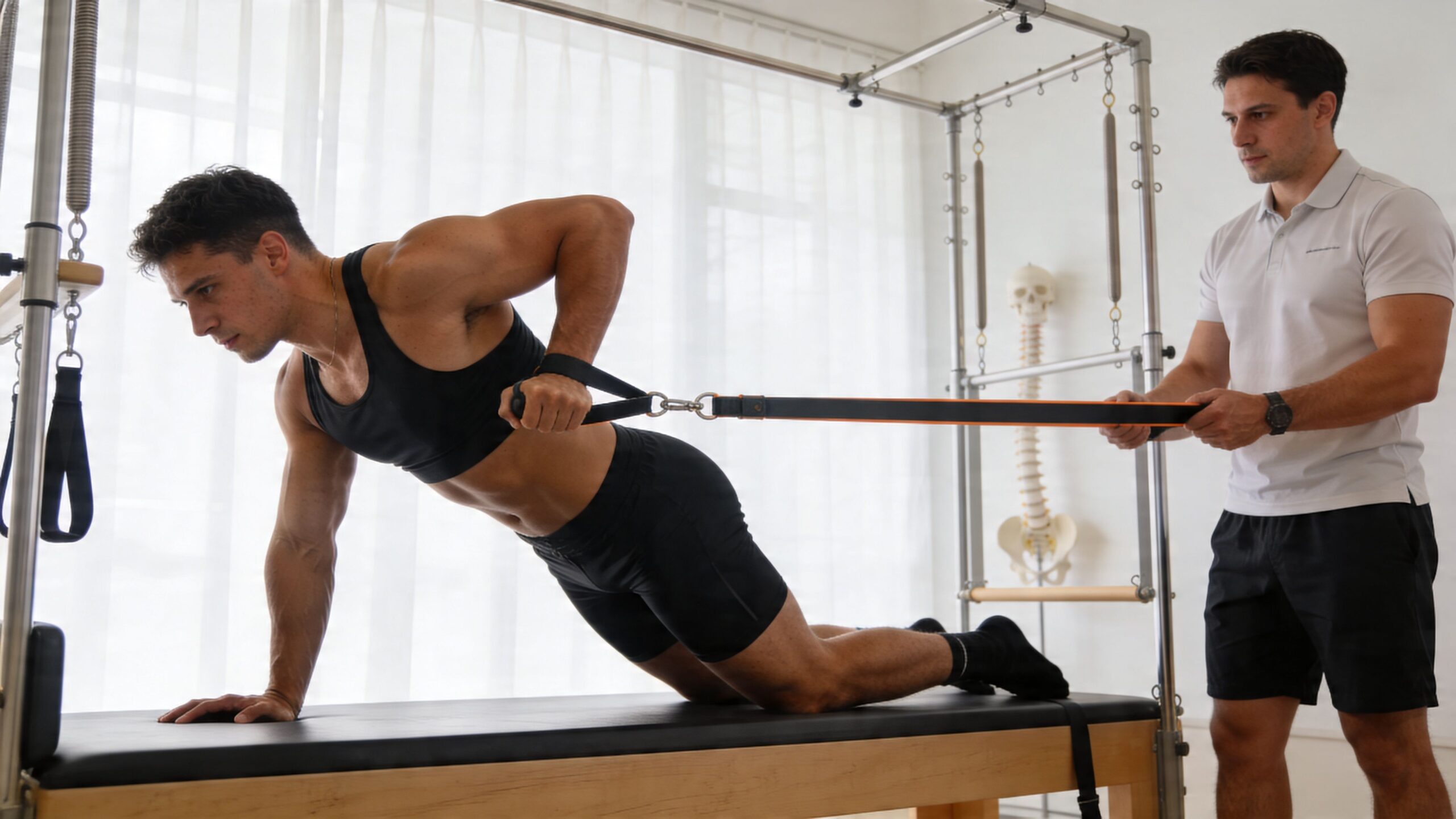
Why strength and control matter
Think about a lifter whose hip gets freed up with treatment but still can’t control depth under load. Or a runner whose ankle moves better on the table but collapses again when fatigue hits. Or a golfer who gets relief in the clinic but still rotates through a stiff thoracic spine and overloaded low back on the course.
That’s why active rehab matters. You have to train the body to own the range it just got back.
A performance-focused plan should include progressive exercises that match your actual demands. Not random clamshells forever. Not a red band and a prayer. Real progressions tied to your sport, your weaknesses, and the positions that keep breaking down. If you’re looking for that style of care, an active recovery physical therapy model is far more useful than endless passive visits.
This matters even more after surgery
Post-surgery patients get especially bad advice. Many are told to finish basic rehab, avoid aggravating things, and just “give it time.” That’s not enough if your goal is to return to an active life.
A source discussing sports performance and chiropractic states that a 2025 study reported 68% of post-surgical athletes experience recurrent pain without combined manual therapy and active rehab, and it also states that chiropractic-led rehab after surgery can produce a 40% faster return-to-activity compared with physical therapy alone, as described in this chiropractic and sports performance article.
Passive care can make you feel better. Active rehab makes you harder to hurt again.
One example in South Jersey is Valhalla Performance, where care is built around one-on-one assessment, chiropractic manipulation, and individualized strength and conditioning through the One80 System. That kind of setup fits people who’ve already learned the hard way that relief without rebuild doesn’t last.
Take Control of Your Recovery in South Jersey
You don’t need more random treatment. You need a clear answer.
If you’ve tried physical therapy, standard chiropractic, or both, and you’re still modifying every workout, your problem probably wasn’t “hard to fix.” It was poorly diagnosed, poorly progressed, or treated too passively. That’s why searching sports injury chiropractor near me should lead you to someone who can assess movement, identify the underlying breakdown, and coach you back to full function.
The right approach can move quickly when it targets the root issue. Sports-focused chiropractic practices report that a high majority of patients get 80 to 90% pain relief within 8 to 10 visits, typically over 2 to 3 weeks, by focusing on the root cause instead of only the symptom, according to this overview from Integrated Health Solutions.
If you’re in Marlton, Mount Laurel, Cherry Hill, Moorestown, Haddonfield, Medford, or anywhere in South Jersey, stop guessing. Get evaluated by someone who treats active adults like active adults.
If you’re tired of temporary relief and want a plan built around movement, strength, and long-term results, schedule a Free Discovery Visit with Valhalla Performance. It’s a simple way to talk through your injury, your training goals, and whether this kind of root-cause, performance-based care is the right fit for you.