
Your season ends, but the pain doesn't.
Your shoulder still pinches when you press. Your knee still barks on stairs. Your low back still tightens halfway through a round of golf, a long run, or the second hard roll at BJJ. You've already tried rest. Maybe you tried PT that turned into heat, stim, bands, and a handshake. Maybe you tried chiropractic that gave you short-term relief, then dumped you right back into the same pattern.
That's the part nobody tells you. For athletes with persistent pain, the off season isn't a vacation from the problem. It's your best chance to finally solve it.
If you're a runner, lifter, CrossFit athlete, golfer, or grappler, this matters more than you think. Because if your body is this irritated now, what's it going to feel like after another year of compensating? What will your training look like in five years if every season ends with the same limp, the same stiffness, and the same promise that you'll “take care of it later”?
Later is why people stay hurt.
The Off Season Lie That's Keeping You Injured
The worst off season advice in sports is also the most common. “Just rest.” “Take it easy.” “Back off for a while and see how you feel.”
That sounds reasonable. It also keeps a lot of people stuck.
Rest can calm symptoms. It doesn't rebuild broken movement patterns. It doesn't restore rotation to a hip that stopped moving well two seasons ago. It doesn't teach your shoulder blade to control overhead motion. It doesn't fix the ankle stiffness that keeps forcing your knee to do work it was never built to do.
Rest is not repair
If your body hurts because the same tissues keep taking the same bad stress, then pure rest is like turning off a fire alarm while the wiring still smolders behind the wall.
You feel better for a minute. Then you go back to running, lifting, swinging, rolling, or jumping, and the pain returns on schedule.
That's why so many athletes live in a loop:
- End the season beat up
- Take time off and feel a little better
- Jump back into training
- Get hurt again in the same place
That cycle isn't bad luck. It's bad strategy.
For athletes who want to stay active for the long haul, off season training should include a serious look at why the pain keeps coming back. If you've been dealing with repeat flare-ups, sports injury prevention strategies matter a lot more than another vague promise to “listen to your body.”
The identity cost is real
Most active adults don't care about pain in the abstract. They care because pain steals the parts of life that make them feel like themselves.
You stop chasing heavy lifts because your back doesn't trust you.
You stop signing up for races because your knee always blows up.
You stop shooting for a takedown because your neck and shoulder feel fragile.
You don't lose your athletic identity all at once. You lose it in small negotiations with pain.
That's why I'm hard on the “just lighten up” mindset. It trains you to manage decline instead of reversing it. If you want a different outcome next season, your off season training has to do more than lower fatigue. It has to rebuild the body underneath the sport.
Your Blueprint for a Pain-Free Comeback
If you've had persistent pain for months or years, guessing is over.
You need a blueprint before you need another exercise. Not a random mobility circuit from Instagram. Not a generic sheet of clamshells. Not another round of passive treatment that feels nice on Tuesday and changes nothing by Saturday.
Find the driver, not just the symptom
Pain rarely tells the full story.
Your elbow pain might start with shoulder mechanics. Your low back pain might be tied to a hip that won't rotate. Your knee pain might be coming from an ankle that lost motion after an old sprain you shrugged off years ago. If nobody assesses how you breathe, squat, hinge, rotate, balance, and absorb force, they're not finding the root cause. They're chasing smoke.
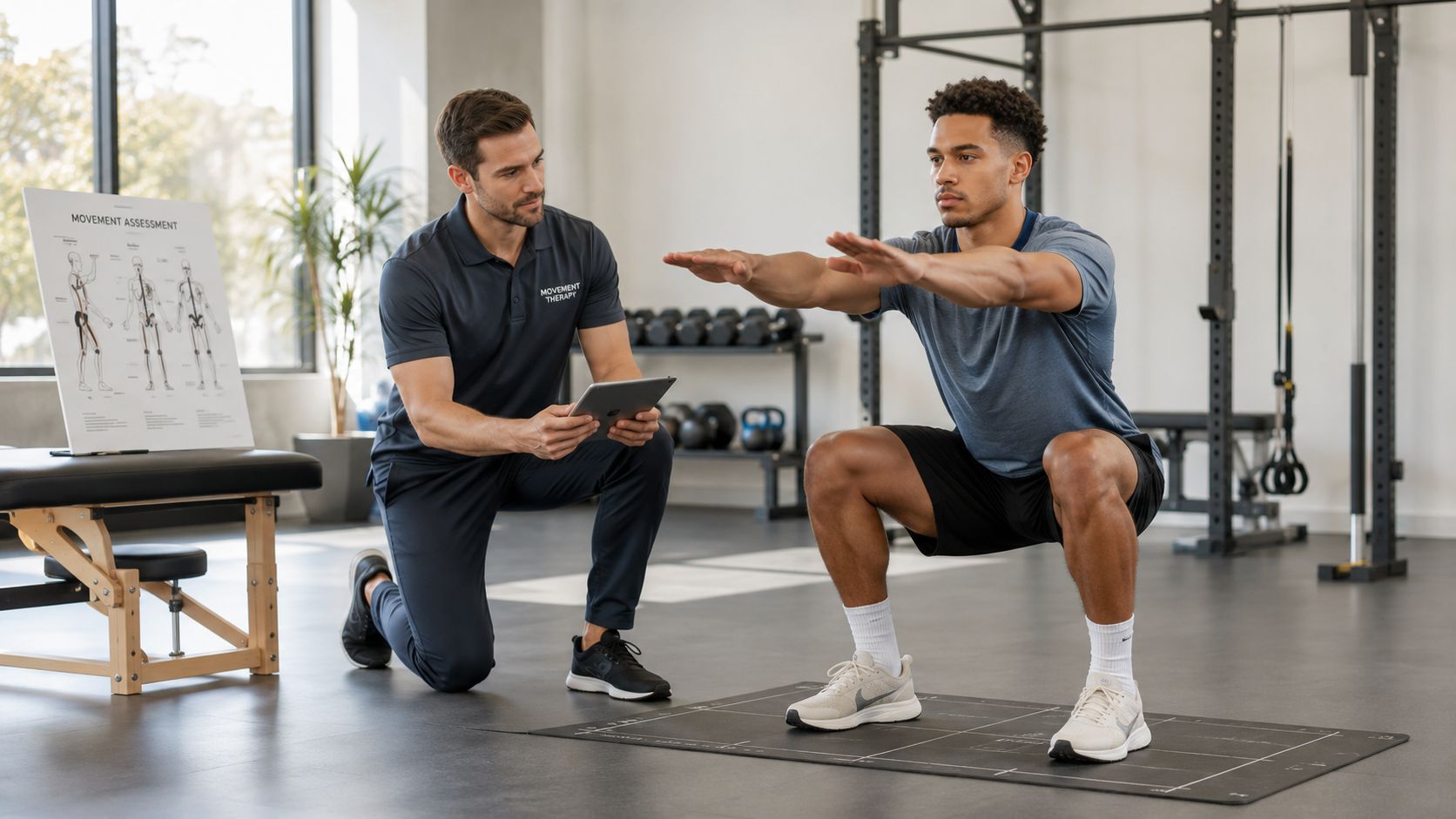
That's why the first step in off season training for an injured athlete is a thorough movement assessment. You need to see where motion is missing, where control is weak, and where your body has been compensating under load.
A house built on a crooked foundation doesn't need prettier paint. It needs a corrected foundation.
Stop rewarding the compensation
A lot of athletes think they need to “push through” the off season because it's the only time they can finally get ahead. That's exactly how they dig the hole deeper.
Expert guidance for athletes dealing with pain or prior injuries emphasizes a minimal effective dose and prioritizing movement quality over chasing more volume or intensity, because piling on more work can build fatigue before the next season even starts, as noted in this off-season guidance for athletes managing pain and recovery.
That idea matters because more training on top of bad mechanics doesn't make you tougher. It makes your compensation pattern stronger.
Practical rule: If an exercise builds fitness while reinforcing the movement that's hurting you, it's not helping your comeback.
What a real blueprint should answer
A real plan should tell you:
What movement is missing
Not “you're tight.” Specific missing pieces, like ankle dorsiflexion, hip internal rotation, thoracic extension, or scapular control.What your body is overusing
Maybe your low back creates rotation your hips can't access. Maybe your neck and upper traps do the job your shoulder blade should handle.What loads you tolerate well right now
Not what you used to lift. Not what your program says. What your body can control today without paying for it tomorrow.
For athletes in South Jersey, one option is Valhalla Performance, a movement-based clinic in Mt. Laurel that uses one-on-one assessment and strength-based rehab to identify root causes and build a personalized return plan.
Rebuilding Your Foundation with Smart Strength
Most injured athletes make the same off season mistake. They test strength before they rebuild movement.
That's backwards.
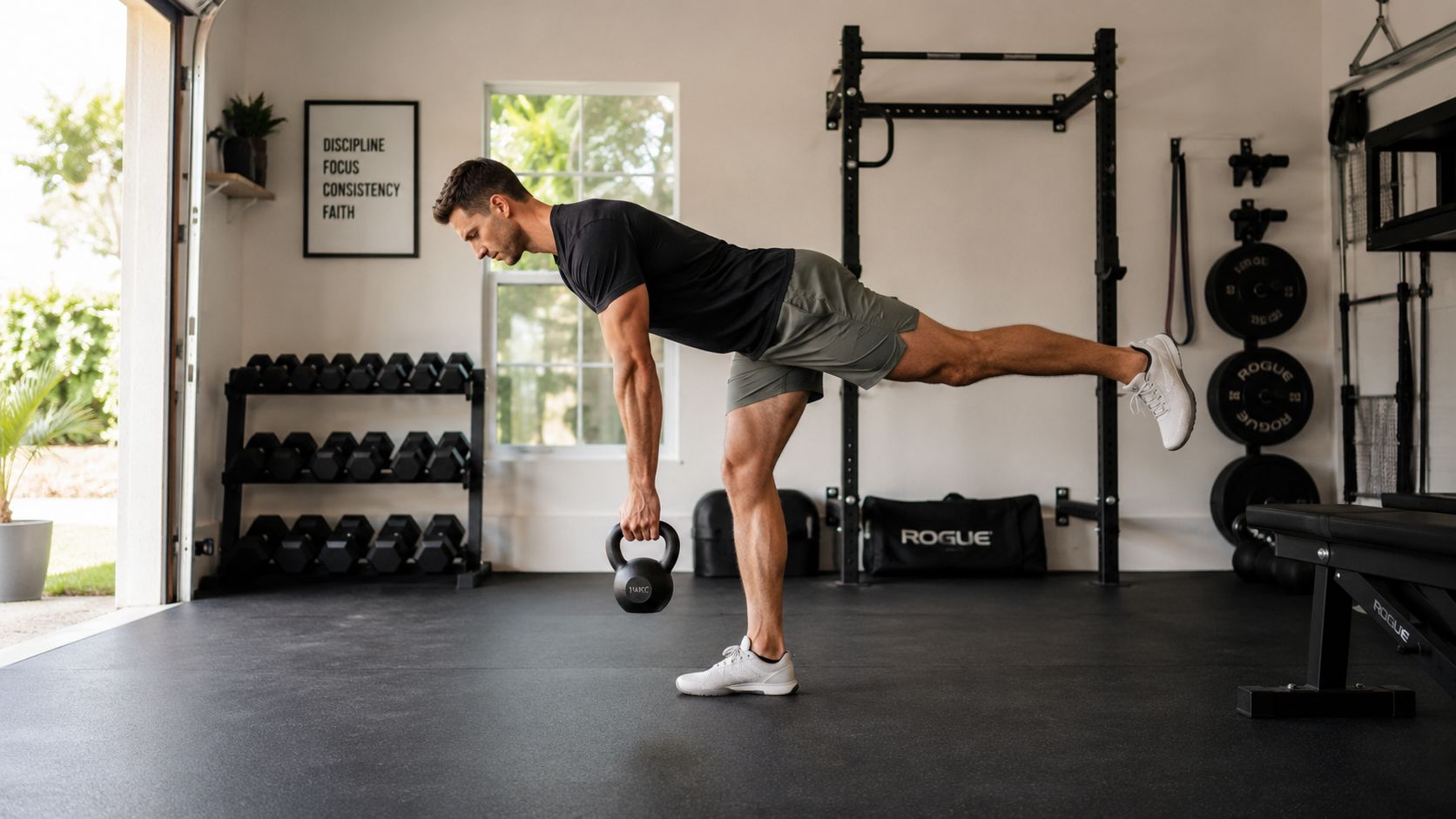
If your body can't own a position, loading it hard just teaches a stronger compensation. Smart strength work starts by restoring access to the right positions, then teaching you to control them, then adding meaningful load.
Mobility and stability are not the same job
You need both, and athletes confuse them constantly.
Mobility is getting into a position.
Stability is controlling that position under force.
A golfer with low back pain may have enough motion to rotate, but not enough hip mobility to rotate where it counts. So the lumbar spine picks up the slack. A CrossFit athlete may have enough passive shoulder range to get overhead, but not enough scapular control to keep the joint centered during kipping or barbell cycling.
That's where smart strength earns its keep. It turns borrowed positions into usable ones.
What this looks like in real sports
Here's how root-cause rebuilding often plays out:
CrossFit athlete with shoulder pain
Skip the urge to jump right back into high-volume kipping, jerks, and snatches. Start with scapular upward rotation control, ribcage position, and single-arm pressing variations you can own. If your shoulder blade can't move well, the front of your shoulder pays the bill.Runner with knee pain
Don't just hammer quads and hope for the best. Check ankle motion, single-leg control, and hip loading. If your pelvis drops every stride and your foot can't manage force well, your knee becomes the complaint department.BJJ athlete with neck or elbow irritation
Look at thoracic rotation, grip strategy, shoulder control, and how you frame. If you're stiff through the upper back and unstable through the shoulder, you'll keep muscling positions with tissues that are already angry.Golfer with low back pain
Train hip rotation, split-stance control, anti-rotation strength, and ribcage mechanics. If your spine keeps twisting because your hips won't, don't blame the swing alone.Weightlifter with chronic hip pinch
Don't force deep positions you can't control. Clean up squat stance, pelvic control, and hip capsule access. Then earn depth instead of diving into it.
If you want a better model for athletic rehab and performance work, strength and conditioning for athletes should look like targeted rebuilding, not random sweating.
Build strength in layers
I like a simple progression:
Restore position
Open what's limited. That might mean ankle work, hip rotation drills, thoracic mobility, or front-rib control.Own the position
Use isometrics, tempo lifts, carries, controlled eccentrics, and single-limb work.Load the pattern
Squat, hinge, push, pull, lunge, carry, rotate, and accelerate once the body can do it without cheating.Return to sport-specific demand
Now you earn the dynamic stuff. Not before.
If your shoulder hurts during kipping pull-ups, another mobility band warm-up isn't a plan. Better scapular control and better pressing mechanics are.
The standard is movement quality
During this period, athletes get impatient. They want proof they're still “training.”
Fine. Train hard. But train the right thing.
Your off season training should leave you more symmetrical, more controlled, and less reactive. It should make your joints feel safer under load. It should reduce the feeling that one side always takes over. If your program only makes you tired, it's not a rebuild. It's just exercise.
Managing Your Engine Conditioning and Load
A lot of athletes are terrified of losing fitness in the off season. That fear drives dumb decisions.
They keep volume high because they think less work means starting over. Then the same tissues stay irritated, recovery never catches up, and they enter the next season with a bigger engine strapped to a crooked frame.
That's not preparedness. That's expensive denial.

Cut the junk volume, keep the sharpness
A practical off-season framework recommends a complete break from structured training for a couple of weeks, then a rebuilding phase where training volume is cut by about 50% while pace and intensity stay similar, which helps restore freshness and support long-term adaptation without major detraining, according to this evidence-based off-season training framework.
That's the model more active adults need to hear. Not “do nothing.” Not “grind through it.” Recover first, then rebuild with less total work and better quality.
How to apply it without overthinking it
The key principle is simple. Reduce volume while preserving intensity.
That means:
- Runners keep some faster work or structured efforts, but cut the endless extra mileage that keeps the knee, Achilles, or hip irritated.
- CrossFit athletes keep power and skill exposures, but stop living in high-rep fatigue where form unravels.
- BJJ athletes cut down live rounds and use focused drilling, positional work, and short high-output efforts instead of surviving every session.
- Lifters keep meaningful bar speed and intent, but trim the total number of hard sets that just pile stress on cranky joints.
Conditioning should support healing, not block it
A lot of people confuse fatigue with effectiveness. They finish a session wrecked and assume they did something productive.
Not true.
If your knee is flared for two days after a “conditioning” piece, or your shoulder feels unstable after every upper body day, your conditioning isn't supporting your rehab. It's interfering with it.
Use this filter:
| Question | Good sign | Bad sign |
|---|---|---|
| Can you recover by the next planned session | You feel worked, not wrecked | You're still inflamed or guarding |
| Does your pain stay stable or improve | Symptoms settle quickly | Symptoms ramp up after every session |
| Do mechanics stay clean under effort | Form holds | You start cheating to finish |
| Are you building confidence | You trust the body more | You keep bracing for a flare-up |
Conditioning should leave you feeling capable, not fragile.
Specific examples that work
A runner with knee pain might do fewer total miles but keep one sharp interval session if mechanics stay clean. A BJJ athlete with a sore neck might reduce full sparring and use short, intense positional rounds that avoid repeated ugly scrambles. A lifter with back pain might keep explosive intent on trap bar pulls or sled work while stripping out the extra fatigue that turns every hinge into a gamble.
That's how off season training protects your engine without burning the chassis.
Sample Off Season Plans and Return-to-Sport Tests
Individuals don't need more motivation. They need a plan that tells them what to do when pain has hijacked their normal training.
So let's make this concrete. Below are two sample off season training paths for active adults dealing with persistent pain. These aren't cookie-cutter medical prescriptions. They're practical examples of what rebuilding can look like when the goal is to return stronger, not just less sore.
Eight-week rebuild framework
| Phase | Athlete Profile 1 CrossFit Shoulder Pain | Athlete Profile 2 Runner Knee Pain |
|---|---|---|
| Unload and assess | Pull back from kipping, barbell cycling, high-volume overhead work, and movements that reproduce the pinch. Assess thoracic motion, scapular control, rib position, pressing pattern, and pulling mechanics. Use pain-free horizontal pulling, carries, landmine pressing, controlled tempo work, and breathing-driven trunk work. | Reduce painful mileage and hills. Assess ankle motion, single-leg balance, hip control, cadence habits, landing pattern, and step-down quality. Use bike, incline walk if tolerated, sled drags, split squat variations, calf work, and low-irritation aerobic training. |
| Rebuild and strengthen | Progress to single-arm dumbbell press variations, controlled pull-up regressions, bottoms-up kettlebell work, serratus-driven wall work, rows, carries, and rotational trunk control. Reintroduce overhead positions only if shoulder blade mechanics stay clean. | Progress to single-leg strength, rear-foot elevated split squat if tolerated, controlled step-downs, calf raises, hip airplanes, lateral hip work, and running drills. Add short runs only when symptoms stay calm and mechanics hold. |
| Integrate and perform | Reintroduce barbell overhead work in small doses, then gymnastics skill exposure, then selected higher-velocity work. Keep total shoulder irritation low and avoid piling volume back in too fast. | Rebuild run frequency before chasing long runs. Add controlled strides, then intervals, then event-specific efforts. Keep strength work in place so the knee doesn't inherit all the force again. |
Return-to-sport tests that actually mean something
You should earn your way back. Not guess your way back.
If you've had chronic shoulder pain in CrossFit, I want to see signs that your body can control force before you chase intensity again:
- You can press without shifting or rib flare
- You can hang, pull, and stabilize without the front of the shoulder getting cranky
- You can perform overhead work with the shoulder blade moving cleanly
- You can train upper body on consecutive planned days without a pain spike
If you've had persistent knee pain as a runner, your benchmarks should be just as clear:
- You can control a step-down without the knee diving inward
- You can handle single-leg loading without symptoms building during or after
- You can jog, then run, without changing your gait to protect the knee
- You can tolerate the next day well, not just survive the session
The big mistake with return timelines
People always want a date. “How many weeks until I'm back?”
Wrong question.
The better question is, “What does my body need to demonstrate before I add speed, volume, load, or complexity?” Timelines matter less than capacity. A rushed return is why athletes end up right back in the same cycle.
That's also why return-to-sport physical therapy should involve testing and progression, not hope and good vibes.
Your comeback shouldn't depend on whether pain is quiet for one good day. It should depend on whether your body can repeatedly meet the demands of your sport.
A simple way to think about progression
Use three gates:
Calm it down
Remove the aggravators and identify the driver.Build capacity
Get stronger, more stable, and more efficient where you're weak.Prove it
Test the pattern before you reintroduce full sport demand.
That structure works whether you're trying to press overhead again, run pain-free, get back to the mats, or swing a club without dreading the next morning.
Your Next Move Is the Most Important
If you've read this far, you already know the truth. Rest alone hasn't fixed it. More random training hasn't fixed it. Chasing temporary relief hasn't fixed it.
The off season is your window to finally deal with the problem.
Not by babying the body. Not by smashing it harder. By rebuilding it. By finding the root cause, restoring clean movement, loading the right patterns, and returning to your sport with standards instead of hope. That's how you stop repeating the same painful season.
And if you're an active adult in Marlton, Mount Laurel, Cherry Hill, Moorestown, Haddonfield, Medford, or anywhere in South Jersey, this matters now. Because the longer you train around pain, the more normal it starts to feel. Then one day you realize you're no longer training the way you want. You're negotiating with symptoms and calling it normal life.
It doesn't have to stay that way.
A Free Discovery Visit gives you a chance to talk through what's been going on, what you've already tried, and what you want to get back to. No guessing. No pressure. Just a clear conversation about whether a root-cause, movement-based rebuild is the right fit for you.
Another season of managing pain is always an option.
So is finally doing something that changes it.
If you're ready to stop chasing temporary relief and start rebuilding for the long haul, schedule a Free Discovery Visit with Valhalla Performance. If you live in Marlton, Mount Laurel, Cherry Hill, Moorestown, Haddonfield, Medford, or the surrounding South Jersey area, this is your chance to get answers, understand the root cause of your pain, and map out a real path back to lifting, running, golf, CrossFit, BJJ, or the activities that make you feel like yourself again.