
You’ve seen it on social media: the elite athlete, grimacing as they sink into a tub of ice water. You just finished a soul-crushing workout at the gym, and you know tomorrow is going to hurt. You've heard ice baths for athletes are the answer, but you’re wondering—is this just a temporary trick, or a real solution for your aches and pains?
The short answer? They can provide relief. But if you’re an active adult dealing with persistent pain or injury, using them the wrong way can mask the real problem and keep you stuck in a cycle of pain.
The Cold Hard Truth About Ice Baths
It’s easy to see pro athletes taking the plunge and think it’s a magic cure-all. But here's the reality: cold water immersion is a tool, not a solution. Wield it incorrectly, and you can actually sabotage your long-term goals for getting stronger and building a truly resilient body.
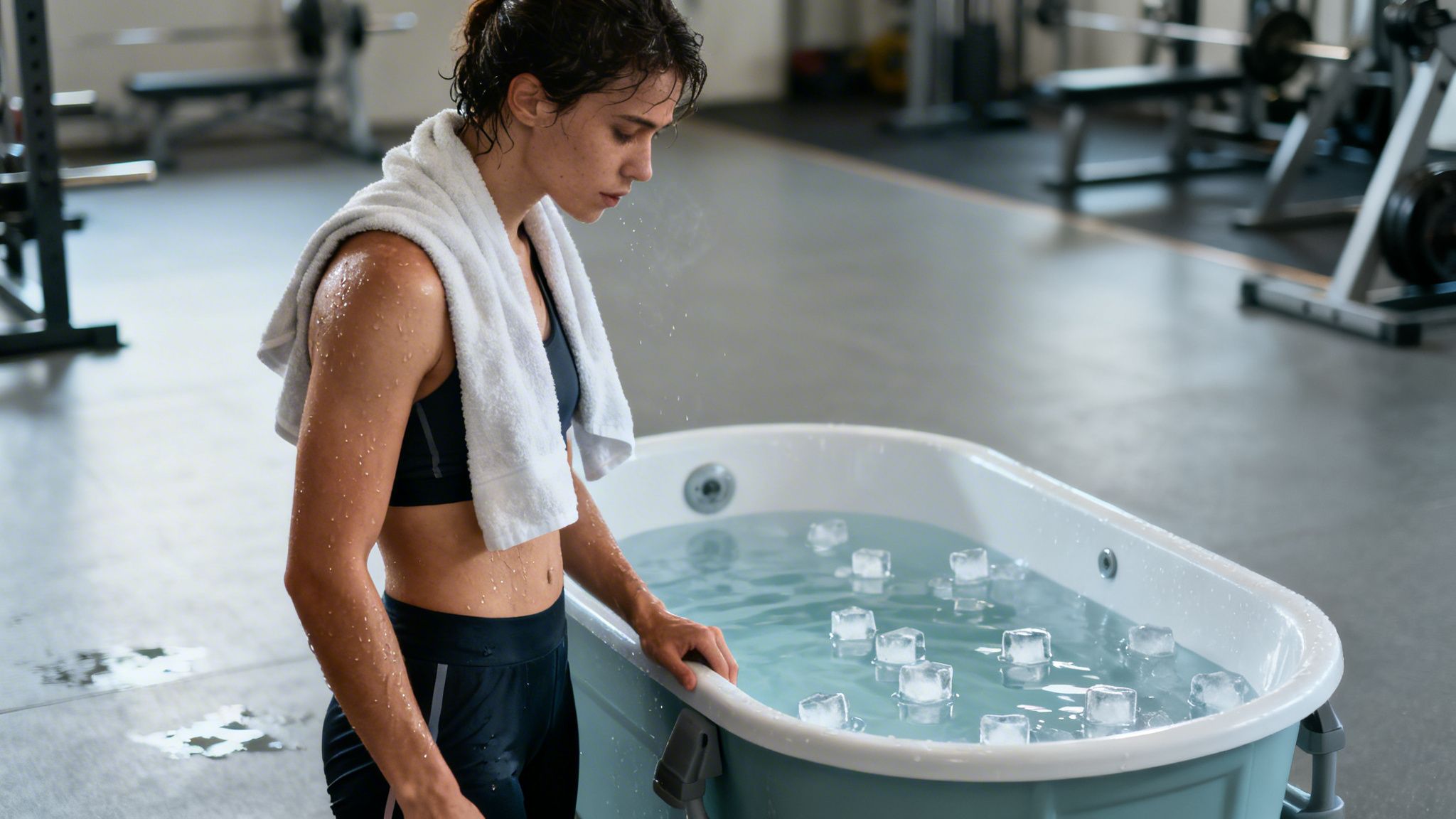
Think of it this way: that inflammation you feel after a heavy lifting session? That's not just pain. It's a signal. It’s your body’s call to action to repair and adapt.
Jumping into an ice bath right after a strength workout is like hitting the mute button on that signal. You’re telling your body, "Never mind that 'get stronger' message, just make the pain stop for now." This offers temporary relief but does nothing to address why you're in pain.
Recovery vs. Adaptation: Know Your Goal
So, when is the right time to brave the ice? It all boils down to one simple question: are you trying to recover for your next performance or adapt to get stronger?
- Adaptation (Building Strength): If your goal is to build muscle after a tough day of squats or deadlifts, step away from the ice. Let that natural inflammatory process do its job. This is essential for long-term strength gains.
- Recovery (Reducing Soreness): If you're in the middle of a weekend soccer tournament or have back-to-back CrossFit comps, your priority has shifted. Here, an ice bath can be your best friend. It’s all about tamping down soreness so you can feel fresh enough to perform again.
This distinction is everything. An ice bath is a temporary fix for acute soreness. It’s not a solution for the underlying reason you’re getting sore in the first place, and it’s certainly not a fix for chronic pain or injury.
Understanding this is the first step to using recovery tools like a pro. For the active adults we work with, this is a game-changer. It's the difference between chasing temporary relief and building a body that's truly resilient. Slapping a cold-water Band-Aid on a problem without ever asking why the problem exists is a cycle we’re here to break.
If you’re tired of playing guessing games with your recovery and want a clear plan to get out of pain for good, we can help. At Valhalla Performance, we serve active adults in Marlton, Mount Laurel, Cherry Hill, Moorestown, Haddonfield, Medford and throughout South Jersey. We don't just treat symptoms; we find and fix the root cause of your pain with movement-based rehab.
Stop the cycle of pain and temporary fixes. Schedule your Free Discovery Visit today and let’s start building a body that performs better for years, not just feels better tomorrow.
How Cold Water Immersion Actually Works
So, why do so many athletes plunge into tubs of ice? Let's get into the science of ice baths for athletes, but without the complicated jargon. After a brutal workout, think of your muscles as a chaotic construction site. Intense training creates tiny micro-tears in muscle fibers, and your body’s first responders—the inflammatory crew—rush in to clean up the mess and start rebuilding.
This inflammation is necessary for long-term muscle growth, but it's also what causes swelling and that "I can't walk down stairs" soreness. An ice bath acts like the site foreman, blowing the whistle to get things under control, temporarily.
The Squeeze and Flush
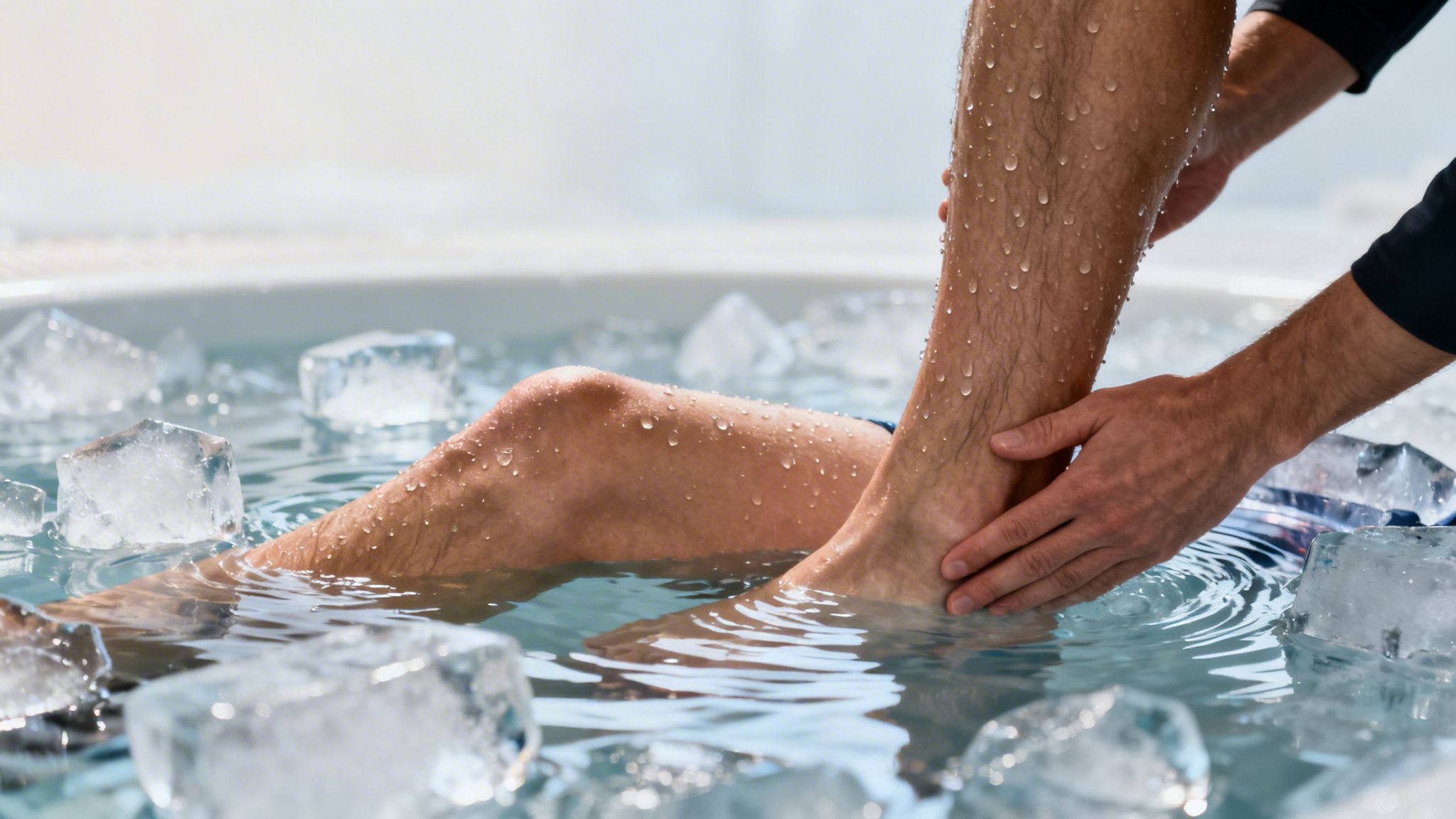
The second you hit that cold water, your body goes into survival mode. Your blood vessels clamp down hard in a process called vasoconstriction. This "squeeze" temporarily restricts blood flow to your muscles, telling that inflammatory crew to take a break.
This gives you two immediate benefits:
- Less Swelling: By clamping down the pipes, you limit the flood of fluid to the area. This helps keep immediate swelling from getting out of hand.
- Waste Removal: That pressure change helps shove out metabolic byproducts, like lactic acid, that contribute to fatigue and soreness.
But some of the magic happens when you get out.
Once you emerge from the cold, your body scrambles to warm up. Your blood vessels open back up—creating a "rebound effect."
Fresh, oxygen-rich blood packed with nutrients floods back into your muscles. This influx delivers the raw materials needed for repair. For any athlete dealing with a nagging injury or just trying to feel human for tomorrow's session, this improved circulation can offer significant, though temporary, relief.
From the Olympics to Your Backyard
This isn't just a trend; it's a common practice for elite athletes. At the Rio 2016 Summer Olympics, cold water immersion accounted for a staggering 44% of all treatments prescribed by physiotherapists. That's a huge leap from just 10% at the Athens 2004 and London 2012 games. This boom shows how athletes chase any available edge. You can read more about the rise of cold therapy in elite sports.
Studies show that a 10-15 minute ice bath can reduce delayed-onset muscle soreness (DOMS). The result? You feel fresher and ready to attack your next session.
This is the kind of strategic recovery we believe in at Valhalla Performance. It’s not about just doing things; it’s about knowing the "why" behind every tool. If you're an active adult in Marlton, Mount Laurel, Cherry Hill, Moorestown, Haddonfield, Medford and South Jersey who's tired of being sore and in pain, understanding these principles is step one. But true progress comes from addressing the root cause, not just the symptoms.
Stop guessing what might work. Schedule a Free Discovery Visit with us today. We'll build you a personalized, movement-based plan that attacks the root cause of your issues and gets you back to performing at your peak.
When to Use an Ice Bath and When to Skip It
Let's get one thing straight: the timing of your ice bath matters. Getting this right is the difference between an athlete who gets real results and one who’s just spinning their wheels, trading long-term progress for temporary relief.
The whole game changes when you ask one simple question: is my goal for today adaptation or recovery?
Thinking this way gives you the power to use recovery tools intelligently. This is a core principle we teach our athletes at Valhalla Performance—using the right tool for the right job to build a body that’s resilient for the long haul.
The Adaptation Goal: When to Skip the Plunge
Picture this: you just crushed a heavy squat session at the gym. Your legs feel like jelly. This is a classic "adaptation" workout. The entire point was to signal your muscles to repair themselves and grow back stronger.
That fire you feel in your quads? The inflammation and swelling? Those are necessary signals for getting stronger and building muscle.
Jumping into an ice bath right now is like yanking the main circuit breaker on that process.
The cold clamps down on your blood vessels and mutes the very signals your body needs to adapt.
Sure, you might feel less sore tomorrow. But you've just short-circuited your long-term progress. You chose temporary comfort over the entire reason you did the workout.
For anyone trying to hit a new deadlift PR or build muscle, using ice baths for athletes immediately after strength training is a bad move. Research shows that regular post-strength training plunges can interfere with long-term muscle and strength gains. You're robbing your body of the stimulus it needs to respond to.
The Recovery Goal: When It's Time for the Ice
Now, let's flip the script. You're a soccer player in a weekend tournament in South Jersey. You just played 90 minutes and have another match in less than 24 hours. Or you're a CrossFit athlete on day one of a two-day competition.
Your goal here has completely shifted. This isn't about long-term adaptation. It's about immediate recovery. You need to beat back muscle soreness so you can show up and perform tomorrow.
This is where the ice bath becomes your secret weapon.
Here’s a quick rundown of when an ice bath is the right call:
- During multi-day competitions: When you have back-to-back games or events, reducing soreness is priority number one.
- After brutal endurance events: A marathon or triathlon wrecks your system. An ice bath helps manage that widespread damage.
- Between two-a-day training sessions: If you're training twice in one day, an ice bath in between can help you feel fresher for round two.
In these scenarios, you're not trying to build new muscle—you're playing defense. The "squeeze and flush" from the cold water helps clear out metabolic junk, reduces swelling, and numbs pain signals. You're trading a tiny bit of adaptation for a massive boost in your ability to perform again, fast.
Deciding when to use an ice bath shouldn't feel like a guessing game. It all comes down to what you're trying to achieve.
Ice Bath Timing for Your Athletic Goal
| Scenario | Should You Use an Ice Bath? | The 'Why' Behind the Decision |
|---|---|---|
| Heavy Strength or Hypertrophy Day (e.g., Squats, Deadlifts) | No. Skip it. | The goal is adaptation. Inflammation is a key signal for muscle growth. Icing blunts this signal and hinders long-term gains. |
| In-Season Game or Competition (with another event < 48 hours) | Yes. Take the plunge. | The goal is immediate recovery. Reducing soreness and fatigue is critical for your next performance. |
| High-Impact Endurance Event (e.g., Marathon, Triathlon) | Yes. It's a great tool. | This is about damage control. The ice helps manage widespread muscle damage and swelling to speed up your return to feeling human. |
| Between Two-a-Day Sessions | Yes. Go for it. | The goal is to be fresh for the second session. The ice bath helps reduce fatigue so you can get quality work in later. |
| General Skill or Technique Work (low intensity) | It's optional. | This type of training doesn't create much muscle damage, so an ice bath isn't necessary. It won't hurt, but it won't provide major benefits. |
This table should be your go-to guide. Stop thinking of recovery as one-size-fits-all and start using tools like the ice bath with purpose.
At Valhalla Performance, we help active adults in Marlton, Mount Laurel, and Cherry Hill end the confusion. It’s not about hopping on the latest trend; it’s about building a smart recovery plan that actually serves your goals.
If you’re tired of the endless cycle of pain, soreness, and guessing games, it’s time for a better way. We invite athletes from Moorestown, Haddonfield, and Medford to schedule a Free Discovery Visit to see how our movement-first system can find the root cause of your pain and build a plan for long-term, pain-free results.
How to Take an Ice Bath the Right Way
Alright, you've decided an ice bath is the right recovery tool for today. Time to move from "what if" to "how to."
First, let's get one thing straight. This isn't a toughness contest. You don't get extra points for sitting in a frozen lake. An effective ice bath is about precision, not pain tolerance.
Forget the social media nonsense. This is about smart recovery.
Temperature and Duration: The Science-Backed Sweet Spot
So, how cold is cold enough? And how long do you actually need to sit in there? The research points to a surprisingly tolerable window.
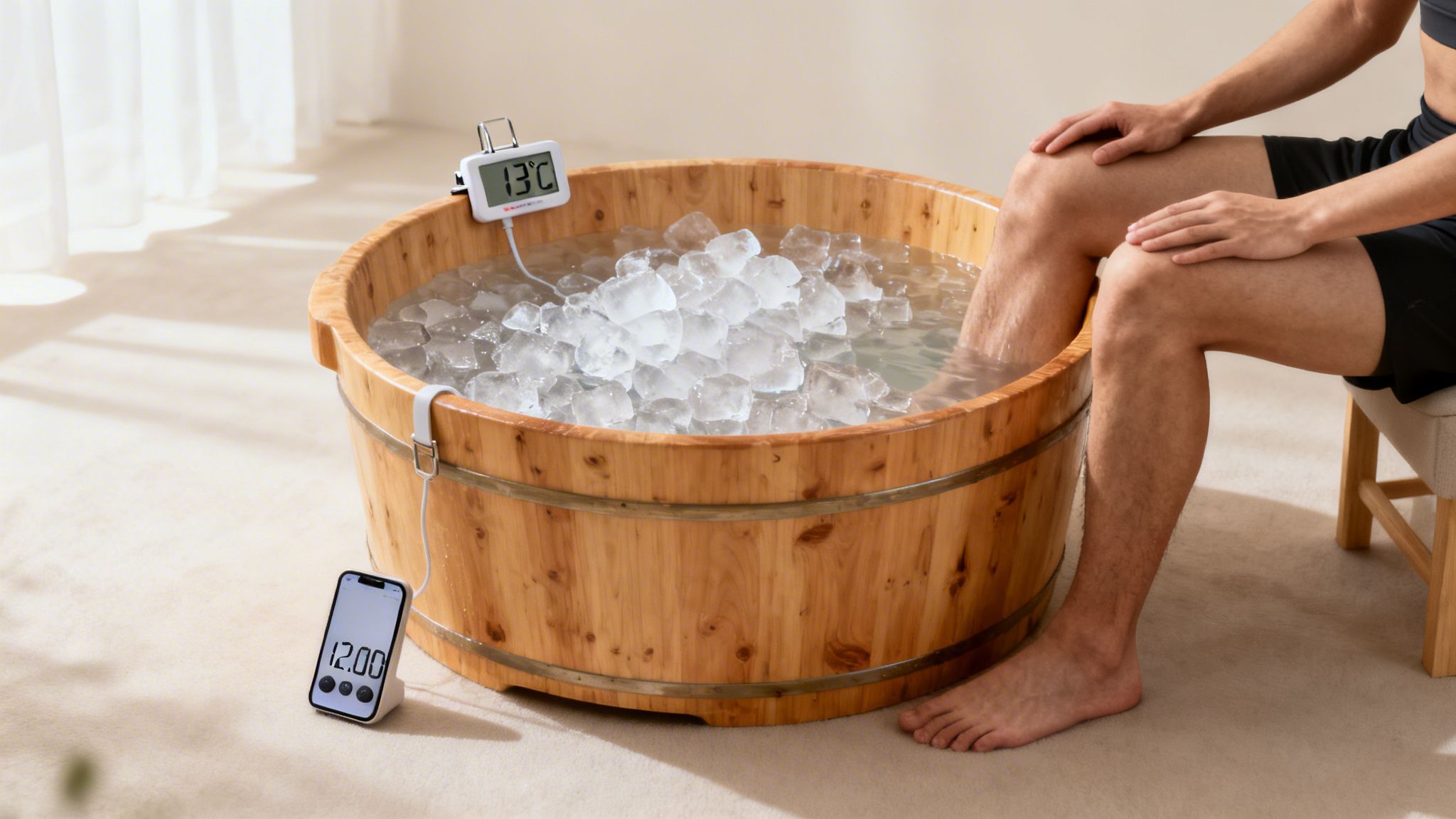
The effective range is 12-15°C (54-59°F) for a duration of 10-15 minutes. That’s the sweet spot to trigger vasoconstriction (tightening your blood vessels), dial down inflammation, and numb soreness without putting your body under unnecessary stress.
Going colder or staying in longer doesn't provide more benefits; it just introduces risks like hypothermia or skin damage. Stick to what works.
Your First Plunge: A Practical Approach
Let's be real: the first 60 seconds are the hardest. Your body's cold shock response will kick in, making you want to gasp for air and jump out. The trick is to win that first minute.
- Start small. You don't have to go full-body on your first try. Just submerging your legs is a great start, especially after a heavy squat or running day.
- Breathe. Before you get in, start taking slow, deep breaths. As you lower yourself in, focus on a long, slow exhale. This helps calm your nervous system and override the initial panic.
- Work your way up. Once you've conquered your legs, you can go waist-deep next time. Then, work up to full immersion (up to your neck) over a few sessions.
The goal is to acclimate your body safely. This is not a "no pain, no gain" situation. It's about using a recovery tool responsibly to support your health.
A massive review of 52 different studies confirmed that cold water immersion significantly reduces feelings of fatigue and muscle soreness within 24 hours post-exercise compared to just resting. For our patients in Marlton, Mount Laurel, Cherry Hill, Moorestown, Haddonfield, Medford and South Jersey dealing with pain, that means faster, less miserable progress in their rehab. You can nerd out on the full research findings right here.
Critical Safety Warnings: When to Stay Out of the Water
Ice baths are a powerful tool, but they are absolutely not for everyone.
You need to AVOID ice baths if you have any of these conditions:
- Cardiovascular issues (heart disease, high blood pressure)
- Poor circulation or peripheral neuropathy (often seen with diabetes)
- Raynaud's disease
- Open wounds, cuts, or infections
The sudden cold puts a significant shock on your heart and circulatory system. If you have any doubt, talk to a healthcare professional before taking the plunge.
At Valhalla Performance, we're all about empowering active adults with knowledge. Using tools like ice baths correctly is one piece of a much bigger puzzle. If you're in South Jersey and ready to attack the root cause of your pain, we’re here to build your plan.
Schedule your Free Discovery Visit today. Let’s figure out how our movement-based approach can get you back to performing at your best—for good.
Smarter Recovery Strategies Beyond the Bath
An ice bath can provide short-term relief, but let’s be real: it’s a temporary fix. It’s like putting a Band-Aid on a problem that needs stitches. For true, long-term resilience, you have to look past just numbing the pain and start asking why you’re in pain in the first place.
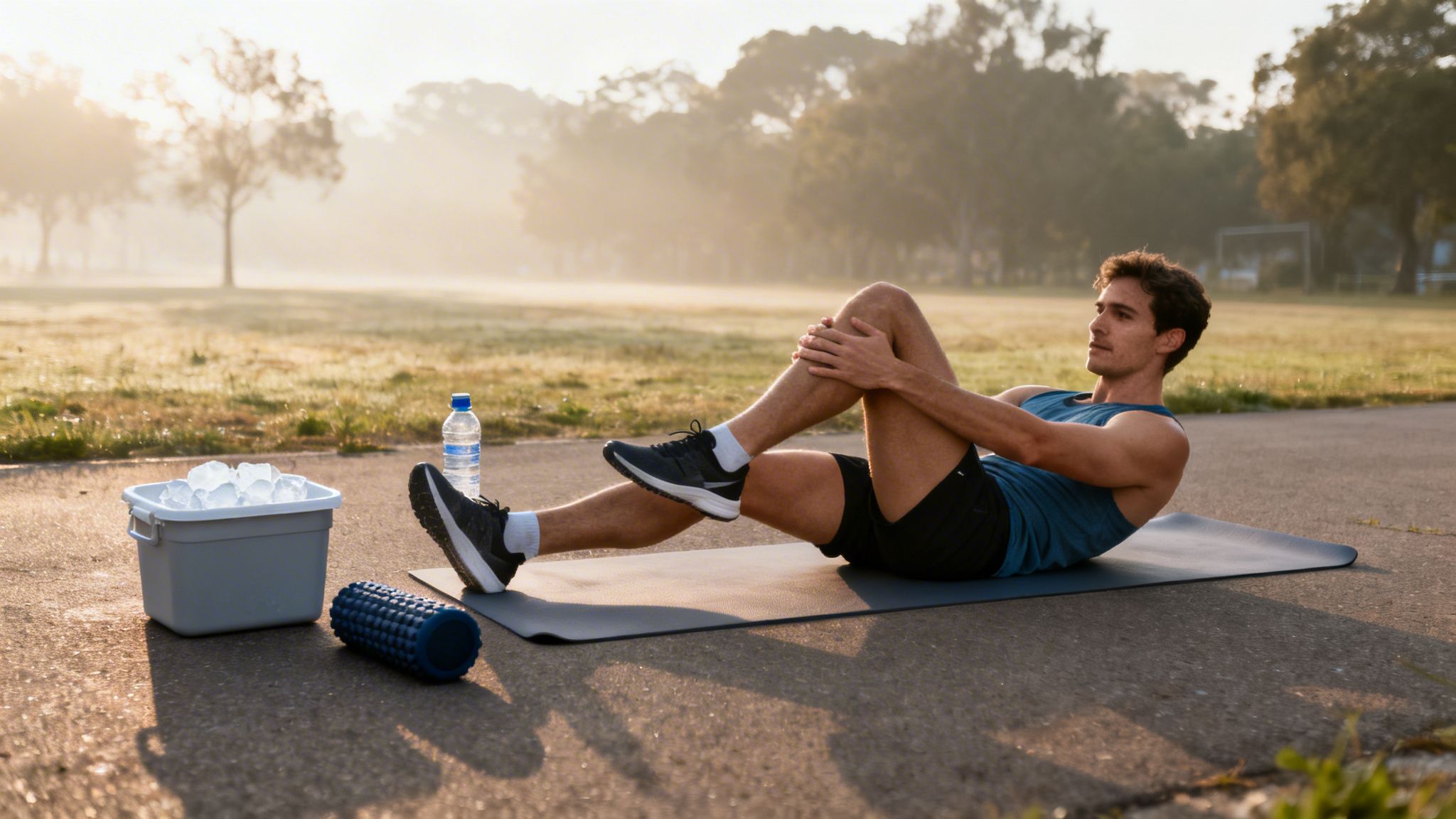
The real secret to breaking the cycle of pain isn’t sitting still—it’s moving with intelligence. This is the foundation of sustainable performance and a core principle we use with athletes across Marlton, Mount Laurel, Cherry Hill, Moorestown, Haddonfield, Medford and South Jersey.
Active Recovery: The Smarter Alternative
Active recovery is simply using light, purposeful movement to help your body heal. Think of a cool-down walk after a hard run, some light cycling after a brutal leg day, or targeted mobility work. This approach keeps blood flowing and gently ushers out metabolic junk without piling on more stress.
Imagine two CrossFit athletes after a WOD heavy on overhead squats.
- Athlete A sits in an ice bath for 15 minutes. They get some temporary relief, but they’ve done nothing to address the tight shoulders or poor hip mobility that made the workout so crushing.
- Athlete B spends 10 minutes on targeted mobility drills for their hips and thoracic spine (upper back) to improve their squat mechanics.
See the difference? Athlete B isn’t just recovering; they're actively fixing the movement issues that lead to soreness and injury risk. They’re attacking the root cause.
Passive recovery, like a long ice bath, just temporarily quiets the alarm bells. Movement-based rehab teaches your body how to disarm the alarm system altogether by actually fixing the problem.
This is the all-important shift from a reactive mindset to a proactive one. It’s about building a body that doesn’t constantly need to be saved from itself.
Pairing Cold Therapy with Movement Rehab
This doesn’t mean you have to ditch ice baths for athletes completely. The key is to use them as one tool in a bigger, more intelligent strategy. A short plunge can be a great way to take the edge off severe soreness, making it more comfortable to then get on the floor and do the mobility work your body actually needs.
This one-two punch is incredibly effective. The ice bath dials down the immediate pain, and the movement-based rehab that follows addresses the mechanical issues that caused it. While the use of cold therapy has surged in elite sports, smart application is everything. You can explore more studies on how ice baths impact athletic recovery.
Your Next Step Beyond Temporary Fixes
If you're an athlete in Marlton, Mount Laurel, Cherry Hill, Moorestown, Haddonfield, Medford or anywhere in South Jersey, and you’re sick of the endless loop of pain, soreness, and temporary relief, it’s time to change your game plan. Stop chasing symptoms and start building real, lasting solutions.
At Valhalla Performance, we specialize in digging down to the root cause of your pain. Our movement-based approach combines expert diagnosis with personalized rehab to not just get you out of pain, but to make you a more resilient, better-performing athlete.
Don’t spend another week guessing. Schedule your Free Discovery Visit today and learn how a smarter recovery plan can finally unlock your true potential.
Your Path to Pain-Free Performance in South Jersey
Alright, we’ve laid out the cold, hard facts on ice baths for athletes. They’re a solid tool for knocking down soreness after a brutal competition. But let’s be real: an ice bath is a Band-Aid, not a cure.
If you’re just icing away the pain from your lifting, CrossFit, or sport, you’re never actually fixing what’s holding you back. Think of the weightlifter who needs an ice bath to survive a heavy squat day but never works on their poor ankle mobility. They aren't getting better. They're just getting by.
Moving Beyond a Tub of Ice
True, long-term performance doesn’t come from shivering in a tub of ice. It comes from building a body that can handle the demands you place on it. That means finding and fixing the weak links, movement flaws, and mobility issues that cause pain in the first place.
This is our entire game plan at Valhalla Performance. We believe active adults in Marlton, Mount Laurel, Cherry Hill, Moorestown, Haddonfield, Medford and South Jersey deserve more than temporary relief. You deserve a real solution that gets you back to performing at your peak, without pain.
An ice bath might quiet your pain for a while, but it doesn't teach your body how to move better. Our mission is to fix the “why” behind your pain, so you can stop chasing symptoms with quick fixes and achieve long-term results.
We dig past the surface-level complaints to find the real villain. That nagging shoulder pain during your overhead press? It might have nothing to do with your shoulder and everything to do with a stiff upper back. An ice bath won’t touch that, but smart, targeted rehab will. You can get more insight into our unique role in sports recovery and see how we build resilient athletes from the ground up.
Your Personalized Game Plan for Real Results
If you're an active adult in South Jersey who's sick of the frustrating cycle of pain, rest, and re-injury, we’re here to help you end that cycle for good.
We combine expert root-cause diagnosis with personalized, movement-based rehab to build a body that's not just pain-free but stronger and more resilient than before.
Stop guessing what might work. Start a plan built for you and your goals. Take the first step toward results that actually stick.
Schedule a Free Discovery Visit with us today. This is a no-pressure chat to discuss your goals, get to the root of the problem, and see how our approach at Valhalla Performance can get you back to doing what you love—stronger and more confident than ever.
Your Ice Bath Questions, Answered
Let's be real: the world of ice baths is packed with more myths than facts. You see them all over social media, but the advice is all over the place.
We hear the same questions from active adults every week in our South Jersey clinic. It's time to cut through the noise and give you straight answers so you can use this tool to get temporary relief, without losing sight of the long-term goal: fixing the root cause of your pain.
How Cold and How Long? The No-BS Numbers
You don't need to go full arctic explorer to get the benefits. Trying to be a hero by sitting in a frozen lake is just asking for trouble.
The science points to a clear sweet spot: 12-15°C (54-59°F).
Stay in for 10 to 15 minutes. That’s the magic window to knock down muscle soreness and calm inflammation without putting your body through unnecessary stress. Going colder or staying in longer doesn't get you more benefits—it just amps up the risk.
Will an Ice Bath Help Me Lose Weight?
Short answer: No.
Sure, your body burns a few extra calories trying to stay warm, but it's a tiny metabolic blip. It is not an effective strategy for fat loss.
Ice baths are for recovery—period. They help manage inflammation and soreness. If you want to lose weight, focus on nutrition and consistent training. Don't look for answers at the bottom of a cold tub.
Can I Take an Ice Bath Before I Train?
This is one of the biggest mistakes we see people make. Taking an ice bath before a workout is a terrible idea.
The cold numbs your muscles, makes your tissues stiff, and interferes with your coordination. Not only will your performance suffer, but you're practically begging for an injury. Your muscles need to be warm and ready for action, not cold and sluggish.
Using an ice bath before a workout is like trying to lift a heavy weight without a proper warm-up. It’s unsafe and counterproductive.
Ice Bath vs. Ice Pack: What's the Right Tool for the Job?
This isn't an either/or debate. It’s about picking the right tool for the right situation.
- Use an Ice Pack for a specific, localized injury. Just twist your ankle playing basketball? An ice pack is your go-to for targeting that one spot to reduce pain and swelling.
- Use an Ice Bath for widespread, systemic soreness. Feeling beat up after a tough CrossFit competition or a long-distance run? The ice bath helps reduce soreness across your entire lower body or full body.
One is for a single, targeted problem. The other is for widespread, post-effort soreness. Neither, however, fixes the underlying cause of your pain.
At Valhalla Performance, we help active adults in Marlton, Mount Laurel, Cherry Hill, Moorestown, Haddonfield, and Medford move beyond temporary fixes. If you're tired of playing guessing games and ready to fix the root cause of your pain for long-term results, we invite you to schedule a Free Discovery Visit with our team.